The right dealer does more than keep paint tins on a shelf: they should help you verify genuine stock, specify a compatible preparation-and-paint system, and plan quantities without hiding costs. By comparing authorisation, technical support, stock, quotations and application responsibilities, you can choose a supplier with fewer risks of shade variation, premature failure or disputed work.
Key takeaways
- Verify the dealer through Asian Paints’ current official dealer channels.
- Compare written quotations for materials, labour, preparation and warranty terms.
- Check shade codes, batch details, seals and quantity before accepting delivery.
- Reject systems that skip surface preparation or hide waterproofing responsibilities.
How to verify that an Asian Paints dealer is authorised
Ask for the dealer’s current authorisation evidence before paying an advance. An invoice carrying an Asian Paints product name does not, by itself, prove that the seller is an authorised Asian Paints dealer.
- Request the Asian Paints dealership details in writing: the legal business name, outlet address, contact number, GSTIN, and the name or number shown on its dealership certificate or appointment letter.
- Ask for manufacturer confirmation through Asian Paints’ official customer-care or dealer-verification channel. Give them the dealer’s legal name, address and GSTIN, and ask whether the outlet is authorised to sell the products you plan to buy.
- Obtain a pro forma invoice before placing the order, then insist on a proper tax invoice at delivery. It should show the seller’s legal name and GSTIN, invoice number and date, product names, pack sizes, quantities, rates, applicable taxes and the delivery address.
- Require separate line items for tinting or colour matching, transport, labour and any warranty or service commitment. Confirm that the invoice identifies the shade code, batch details where available, and whether the material is standard-pack or custom-tinted.
- Read the return terms before payment. Get the policy for unopened standard packs, custom-tinted paint and leftover material in writing; custom-tinted paint usually has stricter return restrictions.
Do not accept a handwritten receipt, a personal bank account, or a quote that hides taxes and charges. If Asian Paints cannot confirm the seller, choose another outlet.
How to compare dealers beyond product availability
A dependable dealer does more than locate tins: it helps specify, match, deliver and resolve problems. Ask what happens after payment, not only whether the requested colour is in stock.
| Capability | Evidence to request | Risk if absent |
|---|---|---|
| Paint tinting machine | The dealer demonstrates the machine and records the shade code and tinting session | Manual mixing can produce inconsistent colour |
| Asian Paints shade card | A current physical shade card is available for comparison in your room’s lighting | Screen colours can mislead |
| Technical advice | The dealer writes the product grade, surface system, coats, dilution and area assumptions | An “emulsion” quote may omit primer or preparation |
| Delivery coverage | The dealer states the delivery area, timing, unloading responsibility and damage procedure | Transport limits appear after ordering |
| Return handling | Written terms cover unopened packs, custom-tinted paint and leftovers | Excess material may become unusable |
Require the exact product name or grade, interior or exterior use, finish, shade code, pack size, number of coats and permitted dilution. Those details make two quotations comparable; “primer” or “waterproofing” does not.
Inspect the dealer’s storage area if possible. Sealed cans exposed to direct sun, badly dented containers, leaking lids, severe rust or unreadable batch labels signal weak stock handling. Ask how the dealer will supply matching batches for later touch-ups.
A useful dealer also separates material, tinting, transport, labour, taxes and service commitments on the invoice. Confirm delivery coverage before ordering, especially for a multi-room project, and get the procedure for reporting transit damage in writing.
How to check tins, shades, batches and paint quantity
A genuine paint tin should arrive sealed, clean and identifiable. Check the intact lid, readable label, batch number, manufacturing date, shade code and MRP label; reject tins with leaks, severe rust, badly dented lids or labels that cannot be read. Direct sun and prolonged heat during storage or delivery are warning signs.
1. Match every tin against the invoice. Ask the dealer to write the exact product name or grade, interior or exterior use, finish, shade code, pack size and quantity. “Emulsion” or “primer” is not specific enough to compare products.
2. Confirm the shade before tinting or delivery. Keep the shade card or colour reference, and ask whether all rooms will use one shade or separate shades. Buy sufficient material from the same batch for touch-ups, because a later batch or tinting session can look different across a large uninterrupted wall.
3. Request a room-by-room quantity estimate showing wall area, assumed number of coats and permitted dilution. Treat label coverage as a starting point: porous plaster, rough texture, dark-to-light changes and repaired patches consume more paint.
4. Compare the complete system, not litres alone. Include cleaner or fungicide, crack filler, putty, primer, waterproofing coat and finish coats where specified; a cheap paint-only quote may omit preparation materials.
5. Check that the invoice separates paint, tinting, transport, labour and taxes. Confirm return rules for unopened standard packs, custom-tinted paint and leftovers before ordering.
How to judge the recommended painting and waterproofing system
Judge the recommendation as a complete system, not by comparing litres of paint. Surface preparation, crack treatment, primer, putty and topcoat can determine durability and total cost more than the finish coat alone.
1. Ask the dealer to inspect the substrate and record whether it is new plaster, previously painted, chalky, cracked, powdery, fungal, saline or glossy. The inspection should cover interior or exterior exposure, ventilation, sunlight, nearby bathrooms, pipe penetrations and previous repairs.
2. Require a damp wall diagnosis before accepting any coating. Rising damp, plumbing leakage, rain penetration, condensation and terrace water ingress need different remedies; painting over an active source causes blistering, peeling, salt deposits or fungal regrowth. Ask what evidence identifies the cause and what repair comes first.
3. Compare the proposed primer, putty and topcoat as one sequence. The quotation should name the surface cleaner or fungicide, crack filler, exact product or grade, interior or exterior use, finish, shade code, pack size, coat count and permitted dilution. “Emulsion” or “primer” is not specific enough.
4. For wet areas, demand a waterproofing system, not a waterproofing product alone. The written method should specify substrate preparation, crack and joint treatment, pipe penetrations, floor-wall junctions, construction joints, parapet corners, reinforcement, coat count, drying or curing intervals and compatible protective layers.
5. Test the recommendation on a small prepared patch. Let it dry fully, then check adhesion, uniformity, sheen, texture and colour under the room’s daylight and artificial light. Repeat this for strong colours, low-sheen finishes and textured walls because the primer beneath can change the final appearance.
How to compare the quotation and define responsibility for the work
Do not accept a per-square-foot total as a complete painting quotation. Require separate amounts for materials, tinting or colour matching, transport, labour, taxes, scaffolding, surface preparation, and any warranty or service commitment.
Each material line must name the exact product or grade, interior or exterior use, finish, shade code, pack size, number of coats, and permitted dilution. Compare the complete system—not litres alone—because omitted primer, putty or crack treatment can make a cheap quote expensive.
Ask Shree Paint Studio, or any dealer, to show every item rather than hiding it under “paint work.”
| Quotation item | Write down | Why it matters |
|---|---|---|
| Materials | Product grade, finish, shade code, packs, coats and dilution | “Emulsion” is not specific enough |
| Charges | Material, tinting, transport, labour, taxes, scaffolding and service fees | Reveals the real project cost |
| Returns | Unopened standard packs, the custom-tinted paint return policy and leftover-material handling | Custom shades often cannot be returned |
| Responsibility | Delivery, application, touch-up and defect correction, naming the responsible party | A product recommendation does not make the dealer liable for application failure |
Attach a labour scope that requires the contractor to protect furniture and floors, scrape and sand surfaces, treat cracks, apply the agreed coats, remove waste, and state curing time before occupancy. For bathrooms or terraces, record whether loose finishes, drain detailing, slope correction and a ponding test are included.
Do not approve the work until the contract states who pays for touch-up and defect correction when peeling, blistering or uneven coverage appears.
Related products
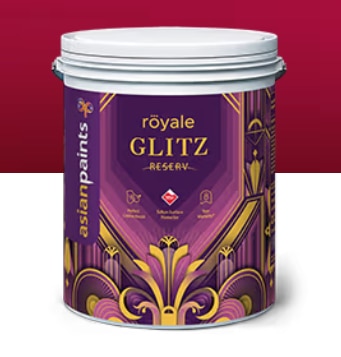 | Asian Interior Wall Paints Royale Glitz Reserv Luxury Emulsion Asian Paints Royale Glitz Reserv Luxury Emulsion is an Soft Sheen interior paint which provides a rich luxurious finish to your walls. View product → |
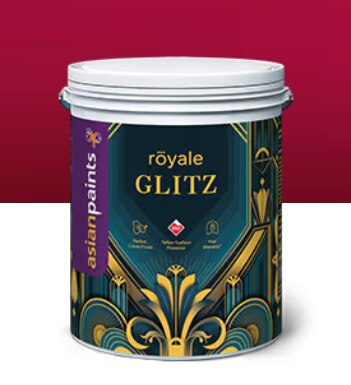 | Asian Interior Wall Paints Asian Paints Royale Glitz Luxury Emulsion is an Ultra Sheen interior paint which provides a rich luxurious finish to your walls. View product → |
Frequently asked questions
How can you verify that an Asian Paints dealer is authorised?
Ask for current authorisation evidence and verify the dealer through Asian Paints’ official website, customer-care channel or dealer locator. Match the verified business name with the invoice and payment details.
What should you compare between Asian Paints dealers besides product availability?
Compare product knowledge, tinting facilities, delivery accuracy, technical guidance, replacement handling, invoice quality and responsiveness after the sale.
How should you check paint tins, shades, batches and quantities?
Inspect seals, product names, shade codes, manufacturing or batch details and pack sizes. Match every tin against the quotation, and calculate coverage from the surface area and specified coats.
How do you judge a recommended painting or waterproofing system?
Check whether the recommendation names surface preparation, primer, putty, number of coats, drying times and compatible waterproofing products. Ask why each layer is required for your substrate and defect.
What should an Asian Paints painting quotation include?
Require separate quantities and prices for materials, labour, scaffolding, surface repairs, protection, transport, taxes and waste removal. Define who handles preparation, shade approval, defects, touch-ups and warranty claims.
Related products
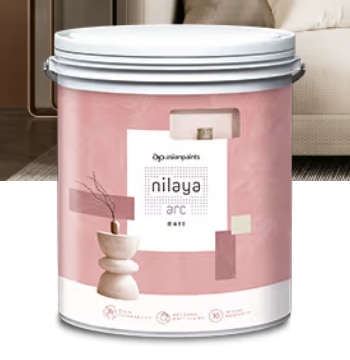 | Asian Interior Wall Paints Nilaya Arc Matt is a unique lime-based offering by Asian Paints that masterfully blends the elgance of heritage with modern sophistication. View product → |
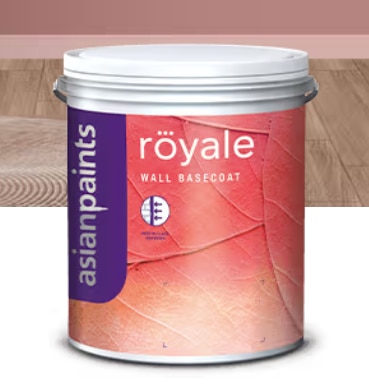 | Asian Interior Wall Paints Get long-lasting spark on your walls, as we offer nothing but the best. View product → |
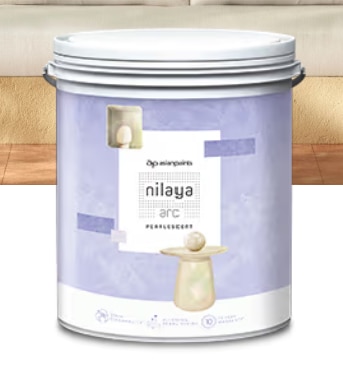 | Asian Interior Wall Paints Super Luxury - Nilaya arc pearlescent Nilaya Arc Pearlescent is a lime-based paint that is deeply rooted in heritage and evokes the artistry of Indian Craftsmanship. View product → |