The right interior paint depends on more than shade and pack price: sheen, wet-scrub resistance, coverage, preparation, drying time and room conditions all affect the finished result. By comparing the complete paint system and its cost per finished square metre, you can choose a suitable Dulux range without paying for features your walls or room do not need.
Key takeaways
- Choose matt for uneven walls and high-sheen for washable, well-prepared surfaces.
- Compare Dulux ranges by finish, washability, coverage and application requirements.
- Calculate litres from wall area, coats and stated coverage—not room size alone.
- Ask the dealer for batch details, tint records and the recommended primer system.
How should finish, lighting and room use shape your shortlist?
Choose the sheen and colour together: a matt finish suits quiet rooms and hides minor defects, while a mid-sheen finish balances wipeability with restrained reflection. Reserve a high-sheen finish for sound, well-prepared walls where cleaning matters more than disguising texture.
| Room or use | Shortlist | Why and what to check |
|---|---|---|
| Bedroom | Matt finish in muted, low-contrast colours | Reduces glare under bedside and ceiling lights; it also conceals small wall undulations and patch marks. |
| Living room | Matt or mid-sheen finish in colours tested on the wall | Compare samples beside flooring, curtains and furniture in morning and evening light. |
| Kitchen | Mid-sheen finish in a light-to-medium colour | Gives easier wiping without making every roller mark, repair or reflection prominent. |
| Children’s room | Mid-sheen finish in a washable, mid-tone colour | Handles fingerprints and cleaning while avoiding the harsh glare of very bright colours. |
| Corridor or rental home | Mid-sheen finish in a forgiving neutral | Frequent contact favours cleaning; neutral colour simplifies later touch-ups. |
| Low-use room | Matt finish in the colour that suits its natural light | Spend less on sheen where scrubbing is unlikely. |
View a sample in at least two wall locations and at different times of day. A premium high-sheen finish is the wrong choice when plaster is uneven, repairs remain visible, strong windows create glare, or the wall has dampness, leaks or salt contamination; paint will not cure those defects.
What differences matter between Dulux interior ranges?
Do not choose by “washable” on the tin. Compare the technical data sheet for wet-scrub resistance EN 13300, stain resistance, VOC content, drying time and recoating time; a higher-sheen finish is not automatically more durable.
| Range | Cleaning and durability | Stains, odour and drying |
|---|---|---|
| Dulux SuperClean | A practical choice for regular cleaning; verify its stated scrub class rather than assuming the label proves performance. | Check stain resistance and whether a stain-blocking primer is specified. Confirm low VOC, drying time and recoating time for the selected base. |
| Dulux Promise Sheen Interior | Compare its published scrub class and sheen against SuperClean; use the result, not the name “Sheen,” to judge durability. | Request VOC details for the tint base and the complete recoat schedule. Low VOC reduces emissions but does not mean zero odour. |
| Dulux Velvet Touch Pearl Glo | Compare its technical scrub rating with the two ranges above before paying for a premium finish. | Check stain resistance, VOC level and cleaning instructions; confirm drying and recoating times for the exact colour. |
| Dulux Velvet Touch Diamond Glo | Treat it as a separate specification, not an automatic upgrade from Pearl Glo. | Ask for its current data sheet, including stain performance, odour guidance and recoat interval. |
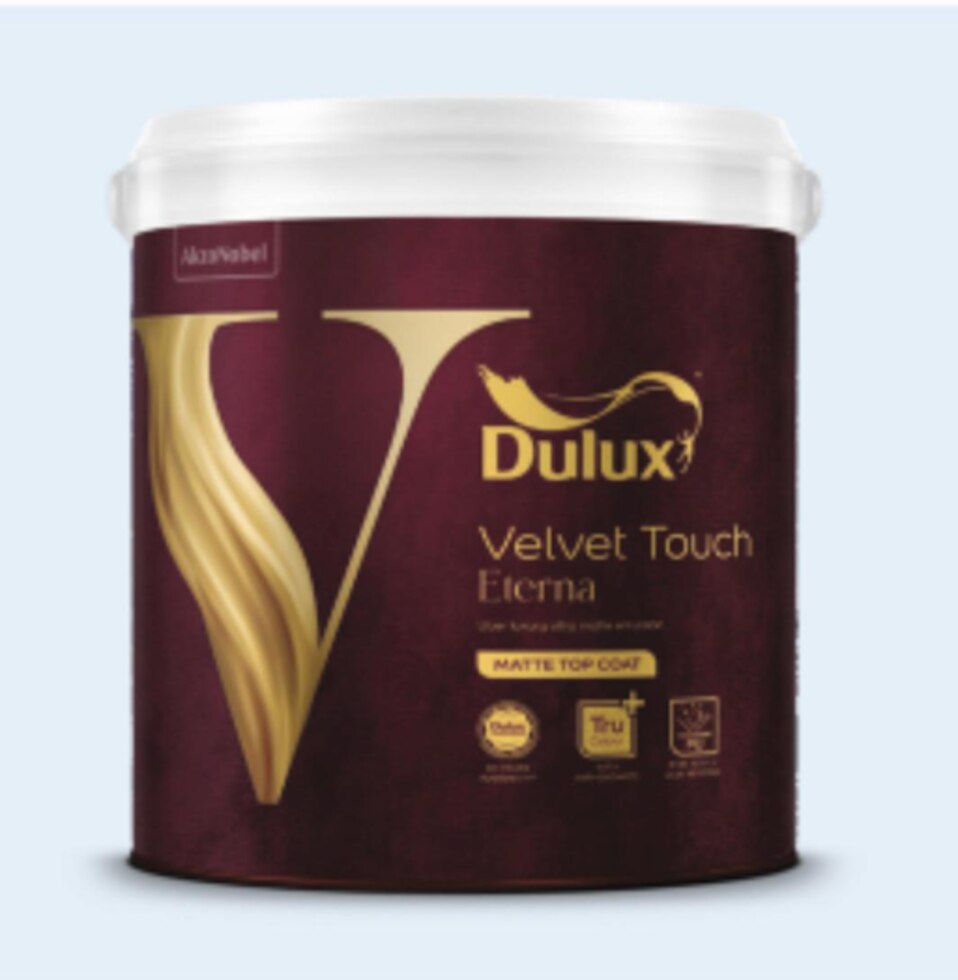
| Dulux Velvet Touch Eterna | Compare its stated durability and wet-scrub class directly with Diamond Glo and Pearl Glo. | Verify VOC, drying time and recoating time for the chosen base and tint. |
Low temperature, high humidity, poor ventilation or an overly thick coat extends drying. Keep washing away until the stated cure period has passed, or even a suitable paint can mark. For nicotine, rust, grease or water stains, eliminate the source and use the specified stain-blocking primer.
What preparation and application system does the wall require?
A good topcoat cannot rescue a damp, dusty or poorly repaired wall. Check the surface before choosing the paint system, because porous plaster, patched areas and strong colour changes can require primer plus two finish coats.
- Start with cleaning grease and dust. In kitchens, remove cooking residue with a suitable cleaner; in bathrooms, remove soap film and allow the wall to dry fully.
- Scrape loose paint, powdery areas and blistered film. Complete crack repair, then apply wall putty and sanding until patched sections feel level and firm.
- Reject damp walls until the moisture source is fixed. Active seepage and recurring salt deposits will cause blistering, peeling, mould or stains; paint is not a waterproofing repair.
- Apply the primer or sealer specified for the surface. Use a stain-blocking primer where nicotine, rust, water or grease has marked the wall after its source is eliminated; extra coats of ordinary emulsion are not a dependable substitute.
- Follow the label’s recommended dilution and mixing restrictions. Too much water reduces hiding and durability, while too little can create drag and roller marks.
- Match the tool to the finish: use a quality brush for edges, a roller with the specified roller nap for broad areas, or spray only when the product permits it. A spray application still needs correct masking and technique.
- Confirm the number of coats and drying interval. Record the product, colour, sheen, batch and application method for future touch-ups.
How do you compare quantity, total cost and dealer information?
Compare the complete paint system, not the cheapest tin. Calculate litres as wall area ÷ actual coverage × number of coats, then add primer, tools and labour. Use cost per finished square metre: total purchase and application cost ÷ the area receiving the complete system.
A pack’s spread rate in square metres per litre is only a starting point. Compare theoretical coverage versus actual coverage on porous plaster, patched areas and strong colour changes; extra coats can erase a lower price. Include unused paint and storage risk, especially when a large pack cannot be used before its shelf life ends.
| Option | What to compare | What failure reveals |
|---|---|---|
| Small or large pack | Price per litre, likely leftover quantity and shelf life | The apparent bulk saving becomes waste |
| Interior paint quote | Primer, finish coats, tools and recommended dilution | The quote understates the finished system |
| Interior versus exterior emulsion comparison | Intended surface, coverage basis and preparation | A product is being chosen for the wrong exposure |
Before paying, ask Shree Paint Studio to show the product data sheet and technical data sheet, then check the pack label for recommended dilution, shelf life, batch number, manufacturing date and shade code. For tinting, record the colour reference and mixing batch.
- Match the invoice to product name, pack size, shade code and quantity.
- Ask how opened or incorrectly tinted containers are handled under the replacement policy.
- Keep the invoice and batch details for future touch-ups.
Related products
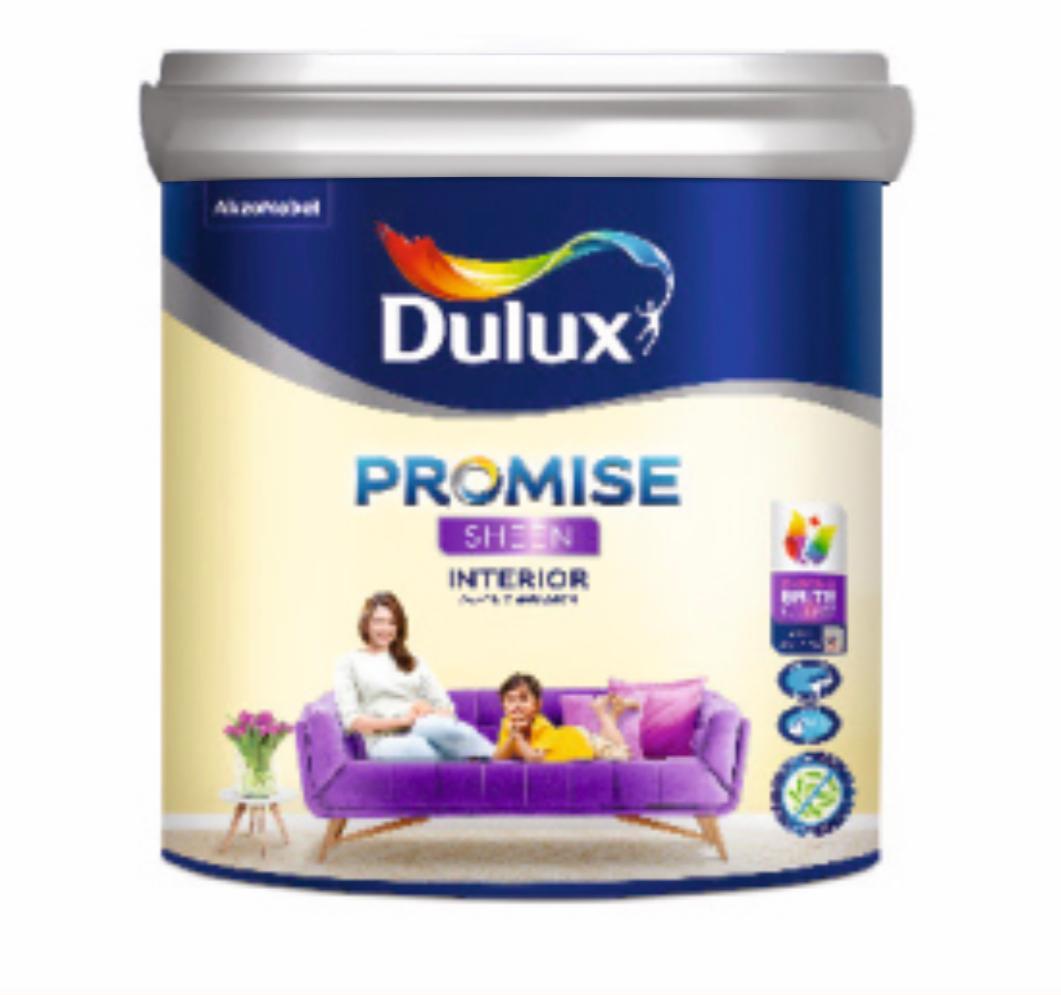 | Dulux Paint Product Description Dulux Promise Sheen Interior Emulsion is a high quality, water based acrylic emulsion paint which provides high sheen to your... View product → |
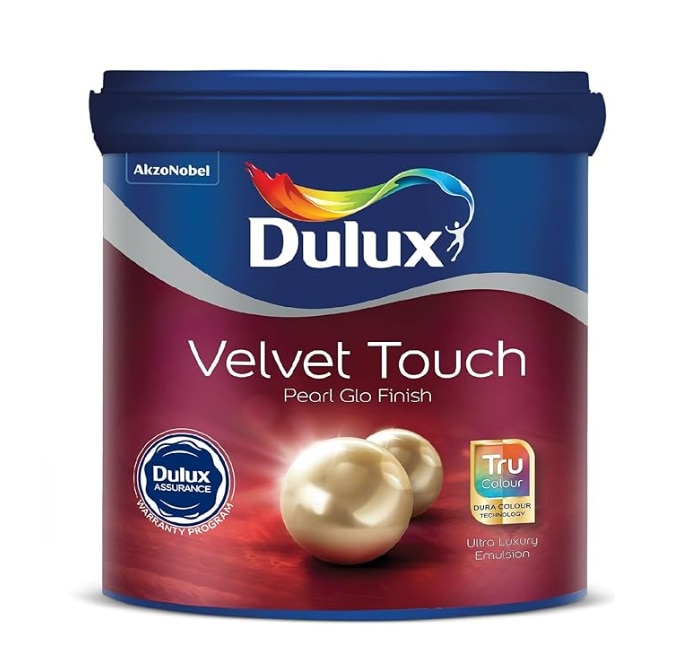 | Dulux Paint Product Description Dulux Velvet Touch Pearl Glo is a premium quality, highly durable and washable emulsion paint with a best mid sheen luxury... View product → |
How should you plan ventilation, washing and future touch-ups?
Plan ventilation before the first coat: open windows and doors, and use a fan to move air outdoors rather than into another occupied room. A low-odour or low-VOC label does not mean zero emissions, so keep ventilation running while the paint dries. Paint smell is not a reliable test of safety.
- Keep children during application and drying out of the room, and remove food, bedding and pet items.
- Use furniture and floor protection even after covering walls; splashes and roller drips are harder to remove once dry.
- Follow the label’s full drying and recoat schedule, not only the touch-dry time. Low temperature, high humidity, poor ventilation and a heavy coat extend curing time.
- Do not wash the wall until the stated curing time has passed. Use a cleaner and soft cloth, light pressure and a small test area; repeated scrubbing can burnish, soften or remove a young film.
- Seal leftover paint storage containers tightly, label them, and keep water-based coatings above freezing. Discarding unusable remainder can erase the saving from a larger pack.
Before disposal, photograph the label and write a colour record containing the product name, colour reference, sheen, batch number, dilution and roller nap. Keep enough touch-up paint for later repairs. Batch matching matters: a new mix, different substrate or different application method can leave a visible patch even under the same colour name.
Frequently asked questions
How should finish, lighting and room use shape your shortlist?
Choose matt for quiet rooms and walls with minor defects, mid-sheen for a balance of wipeability and reflection, and high-sheen for sound walls where cleaning matters most. Test colour and sheen under the room’s actual lighting.
What differences matter between Dulux interior ranges?
Compare the stated finish, washability, coverage, drying time, odour information and recommended uses. Check the product label or technical data sheet rather than comparing range names alone.
What preparation and application system does the wall require?
Identify whether the wall is new, previously painted, damp-stained, chalky or repaired. Clean and dry it, remove loose paint, fill defects, sand smooth, then use the primer and number of topcoats specified for that surface.
How do you compare quantity, total cost and dealer information?
Measure wall area, divide it by the label’s coverage per litre, and allow for the stated number of coats and surface absorption. Compare paint, primer, filler, tools, tinting and delivery together, and ask for batch and shade details.
How should you plan ventilation, washing and future touch-ups?
Ventilate during application and drying according to the label, avoid washing until the stated cure time has passed, and keep the product name, shade code, batch number and leftover paint for future repairs.
Related products
 | Dulux Paint Dulux velvet touch daimond glo Product Description Dulux Velvet Touch Diamond Glo is a super premium quality, highly durable and washable emulsion paint with a best in class high... View product → |
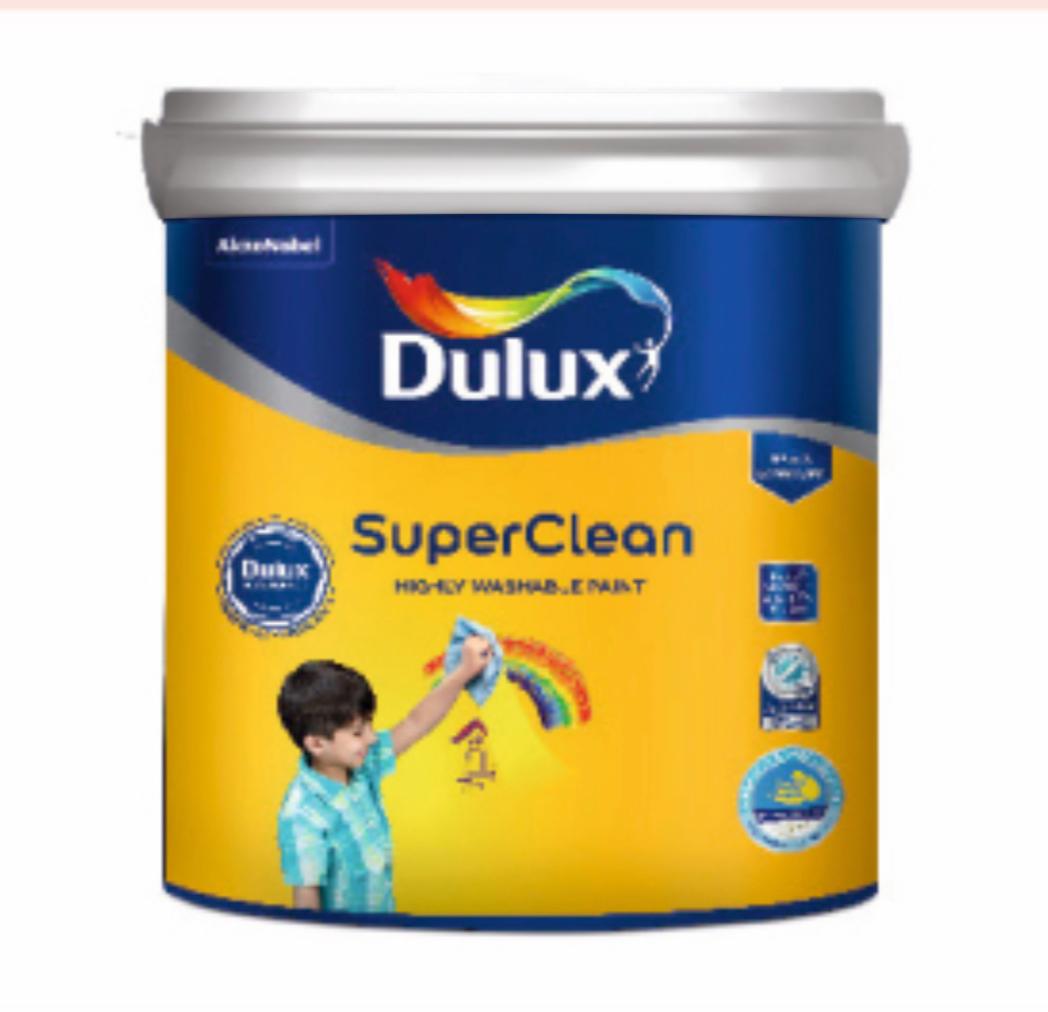 | Dulux Paint Product Description Dulux SuperClean is an interior water-based, high-quality, durable, smooth emulsion paint developed using the unique High Bind... View product → |