The right wall-finishing product depends on what is wrong with the surface, where the wall is located and how much material the substrate will consume. By checking the wall, matching the product to the defect, reading the pack and calculating finished-surface cost, you can test a dealer’s recommendation instead of relying on the word “putty.”
Key takeaways
- Identify the wall substrate, location and moisture problem before choosing putty.
- Match the product to cracks, unevenness, dampness or surface type.
- Confirm curing, cleaning and compatibility before applying any finishing material.
- Compare usable coverage and coats, not just the pack price.
Inspect the wall before you choose a product
Do not ask for “wall putty” until you know what the wall is made of and what is happening on its surface. Record whether it is cement plaster, concrete, brickwork, gypsum board or an existing painted wall; whether it is indoors, outdoors or a ceiling; and whether fresh plaster curing is complete.
Applying putty before curing ends can trap moisture and cause peeling.
Inspect the wall and note:
- Dust and laitance: powdery residue or a weak, chalky surface must be removed before any recommendation.
- Dampness: mark wet areas, recurring moisture, active leakage, fungus and the date or conditions when they appear.
- Efflorescence inspection: look for white, crystalline salt deposits. Continuing moisture movement can bring the salts back through putty and cause debonding.
- Existing coating: check for loose, glossy, blistered or powdery paint, because a weak paint film becomes the failure plane.
- Defects: identify hollow patches, uneven areas, holes and cracks; measure crack width rather than describing every crack as “small.”
- Scope: provide the approximate wall area and the finish you intend to apply, such as matte emulsion, sheen paint or exterior coating.
| Condition to report | What you may see | Why it changes the recommendation |
|---|---|---|
| Sound, cured plaster | Firm surface with no powder or moisture | Suitable products can be compared by finish and thickness |
| Active dampness or leakage | Wet patch, fungus or recurring dark mark | Repair the moisture source before putty |
| Efflorescence | White salt crystals | Treat the masonry or plaster; do not hide an active cause |
| Weak existing coating | Peeling, blistering or chalking paint | Scrape and stabilise the surface first |
| Cracks or hollow plaster | Visible cracks, drummy sound or loose areas | Repair the defect before levelling the wall |
Match the material to the defect and location
A smooth interior plaster wall needs a different material from a damp exterior façade or a ceiling with deep hollows. Fix active leakage, rising damp, roof seepage and recurring efflorescence first; putty cannot stop moisture, and it may blister, powder or detach over a wet substrate.
| Option | Best match | Substrate and exposure |
|---|---|---|
| Standard white cement putty | Minor pores and fine surface irregularities | Sound cement plaster, concrete or masonry; mainly interior, and exterior only when the product data sheet permits it |
| Polymer-modified putty | Better adhesion or modest movement resistance | Sound plaster, concrete and prepared painted surfaces; useful for exterior façades when rated for weather exposure |
| Waterproofing putty | Surface finishing where occasional damp exposure is expected | Suitable cement-based substrates after the moisture source is repaired; it is not a replacement for waterproofing treatment |
| Levelling mortar | Deep hollows, steps and major plaster unevenness | Masonry, brickwork or concrete before thin putty coats; do not fill deep defects with putty alone |
| Crack filler | Narrow, localised cracks after their cause is addressed | Select a flexible or cement-based grade according to crack movement and the substrate |
| Gypsum or acrylic filler | Fine interior repairs and gypsum-board joints | Dry interior walls and ceilings; avoid gypsum products in damp or exterior locations |
Use a compatible filler on gypsum board, not cement putty unless the manufacturer specifically approves it. Remove loose paint and powder before application, and ask for the exact product name, technical data sheet, allowable thickness and interior or exterior rating. A thick coat over an unsound wall will shrink and fail.
Confirm substrate preparation and product compatibility
A smooth finish does not prove compatibility: the wrong putty can debond, crack or soften after painting. Tell the dealer whether the surface is cement plaster, concrete, brickwork, gypsum board, a ceiling, or an existing painted wall, and whether it is indoors or exposed outdoors.
Ask for the exact product name, technical data sheet, allowable coat thickness and interior or exterior rating.
| Substrate | Suitable product direction | Check before application |
|---|---|---|
| Cement plaster or concrete | Cement-based or polymer-modified putty | Surface must be cured, sound, dust-free and free of laitance |
| Brickwork | Repair mortar before finishing putty | Do not use putty to fill deep joints or major hollows |
| Gypsum board | Gypsum-compatible or approved acrylic filler | Use only a product that will not damage paper facing or board joints |
| Painted walls | Compatible acrylic filler or putty | Complete scraping loose paint and remove glossy or powdery films |
| Ceilings | Product rated for the ceiling substrate and moisture level | Treat condensation and leaks before filling |
| Exterior façades | Exterior-rated, moisture-resistant system | Interior-grade filler can fail under rain, ultraviolet exposure and repeated wetting |
Prepare the wall before judging the product. Complete active leakage repair, fungus treatment and removal of efflorescence; repair hollow plaster patches with compatible mortar. Never bury movement cracks or dampness under a thick putty layer, because shrinkage and debonding can return through the new paint.
Read the pack and plan the application sequence
The pack and technical data sheet decide whether the material can be mixed, spread, sanded and primed without failure. Check the water requirement, powder-to-water ratio, slaking time, working time, recommended coat thickness and drying time; do not rely on a dealer’s verbal coverage estimate.
| Product type | Mixing and drying behaviour | Sanding and use |
|---|---|---|
| Cement-based putty | Mix with the stated water requirement; allow the listed slaking time before remixing. Needs drying or curing between coats. | Sand after the stated drying time; suitable primer follows a fully dry surface. |
| Gypsum-based filler | Uses its own water ratio and sets faster, giving a shorter working time. | Sands easily, but excess thickness or damp locations can cause failure. |
| Ready-mixed acrylic filler | Do not add water unless the pack permits it. It is ready to use but still has a defined working and drying time. | Sands readily; check the label for interior-only or exterior suitability. |
Mix only what you can apply within the working time. Never revive material that has started setting by adding water; the repaired layer can lose strength. Apply each coat within the recommended coat thickness, because a thick pass can remain soft underneath while the surface feels dry.
- Let each coat reach the stated drying time before sanding.
- Remove sanding dust before the next coat.
- Apply primer only after the final coat is fully dry and the pack permits that primer.
- Extend drying time when humidity is high, ventilation is poor or the coat is thick.
Compare the real quantity and finished-surface cost
Calculate the net wall area first: measure each wall, multiply height by width, and subtract doors, windows and other openings. Then estimate material with this dry density calculation:
Material required (kg) = wall area (m²) × average dry thickness (mm) × dry density (kg/L)
Use the density and maximum coat thickness from the product’s technical data sheet. Coverage per kilogram on the bag usually assumes a smooth surface and a stated thickness; rough plaster, pores, repairs and extra coats increase consumption. Add a practical wastage allowance after calculating the base quantity.
Compare quotations using the same inputs, not the lowest bag price.
| Item | What to compare | Why it matters |
|---|---|---|
| Pack | Net kilograms and number of bags | A cheaper bag may contain less material |
| Coverage | Square metres per kilogram at the same thickness | Dealer coverage is meaningless if coat thickness differs |
| Application | Number of coats, wastage and maximum thickness | Thicker or repeated coats raise consumption |
| Extras | Primer, additives, transport and an extra-bag allowance | These form part of the finished-surface cost |
| Risk | Failure correction and replacement material | A shortage or weak layer costs more than the initial saving |
Give Shree Paint Studio the substrate, area, location and intended finish, then ask for the calculation against the technical data sheet rather than a verbal estimate.
Before buying, check the exact variant, intact bags, batch number and shelf life. Reject damp-stiffened powder or partially hydrated lumps; nominal weight does not guarantee usable material.
Related products
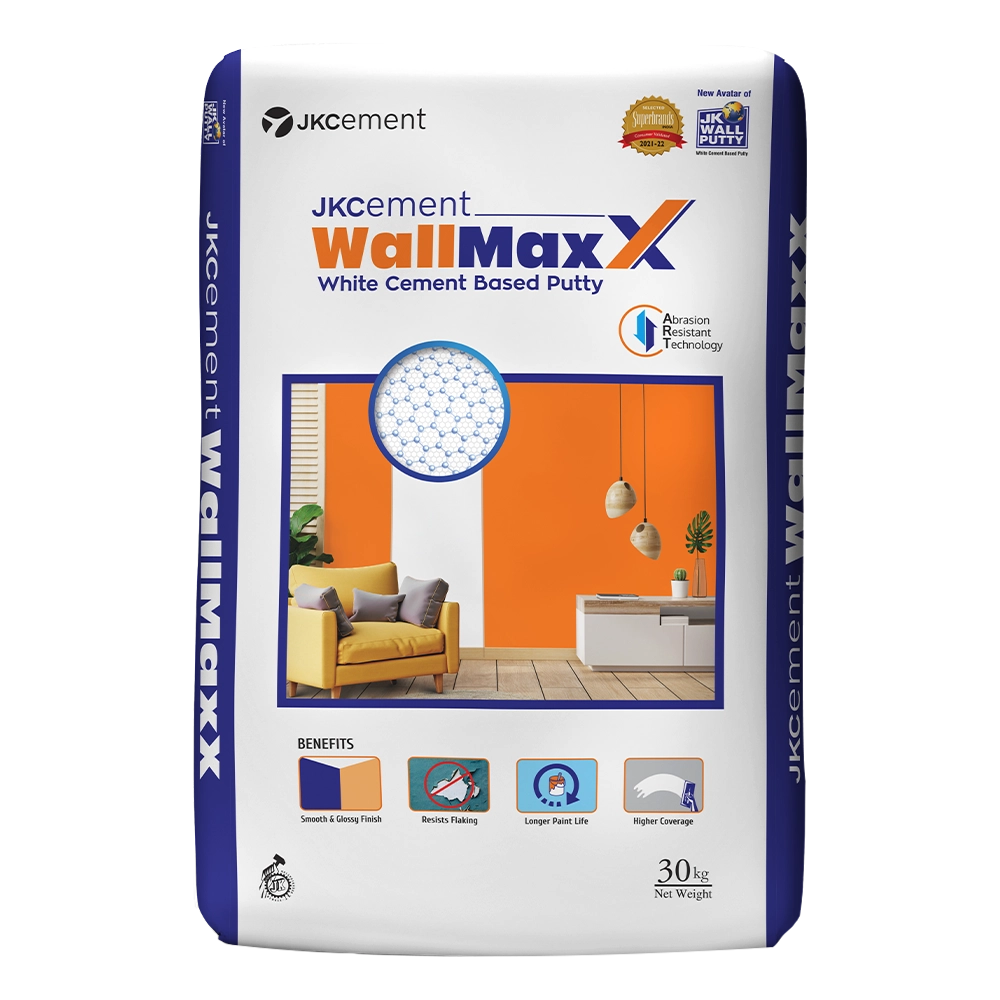 | JK Wall Putty WallmaxX JK Cement WallMaxX is a premium, white cement-based wall putty designed to prepare both interior and exterior walls before painting. |
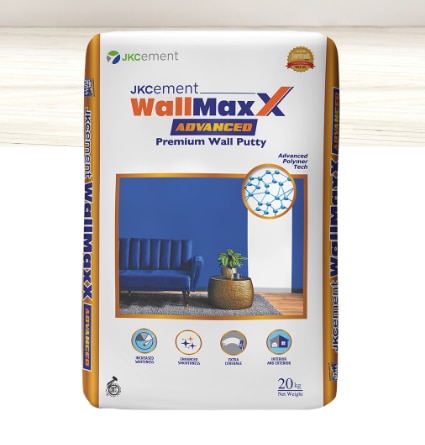 | JK Wall Putty JK Cement WallMaxx Advanced is a premium wall putty formulated with advanced polymer technology which gives triple benefits in terms of better... View product → |
Frequently asked questions
What should I inspect before choosing a wall finishing product?
Identify whether the surface is cement plaster, concrete, brickwork, gypsum board or an existing painted wall. Record whether it is indoors, outdoors or a ceiling, and check for dampness, loose material, cracks and incomplete plaster curing.
How do I match wall putty to the wall defect and location?
Choose a material suited to the defect and substrate. Separate minor surface unevenness from active cracks, damp patches and exterior exposure, because one finishing product is not suitable for every condition.
What preparation and compatibility checks should I make?
Remove dust, loose paint and weak material, allow fresh plaster to cure, and check that the putty is compatible with the substrate, primer and finishing paint before application.
What should I check on a wall finishing product pack?
Read the substrate limits, mixing instructions, water quantity, drying time, coat thickness, coverage, storage conditions, batch details and application sequence before opening the pack.
How should I compare the real cost of wall finishing products?
Compare the area each pack covers at the required number of coats, then include wastage, primer, labour and rework. A lower pack price is not automatically the lower finished-surface cost.
Related products
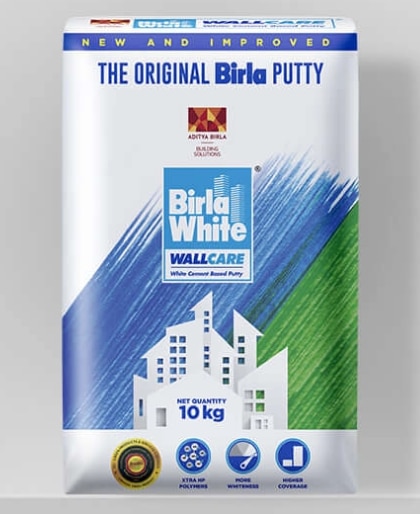 | Birla wall care putty The Birla White WallCare Putty is a water-resistant, white cement-based putty that provides a smooth and strong base for your walls. View product → |
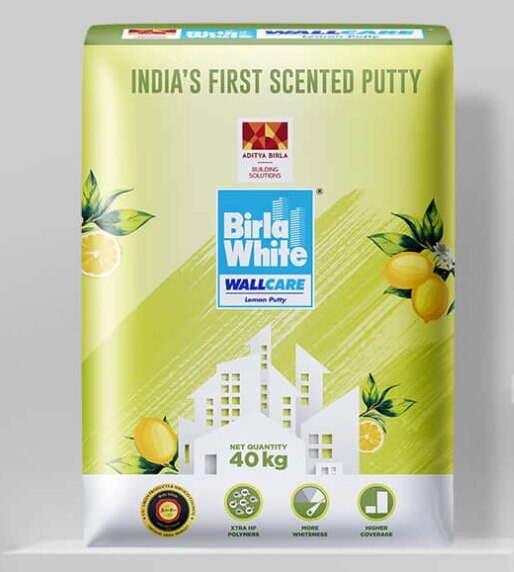 | Birla wall care putty Birla White WallCare Scented Putty is the first of its kind in India, designed to make the wall preparation process much more pleasant. View product → |
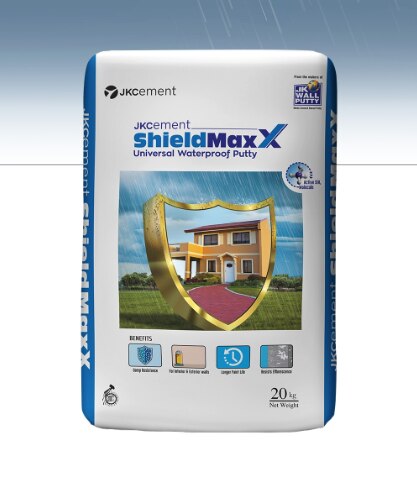 | JK Wall Putty ShieldMaxX JKC ShieldMaxX is a white cement based Universal Waterproof Putty with Active SiH4 Molecules. |
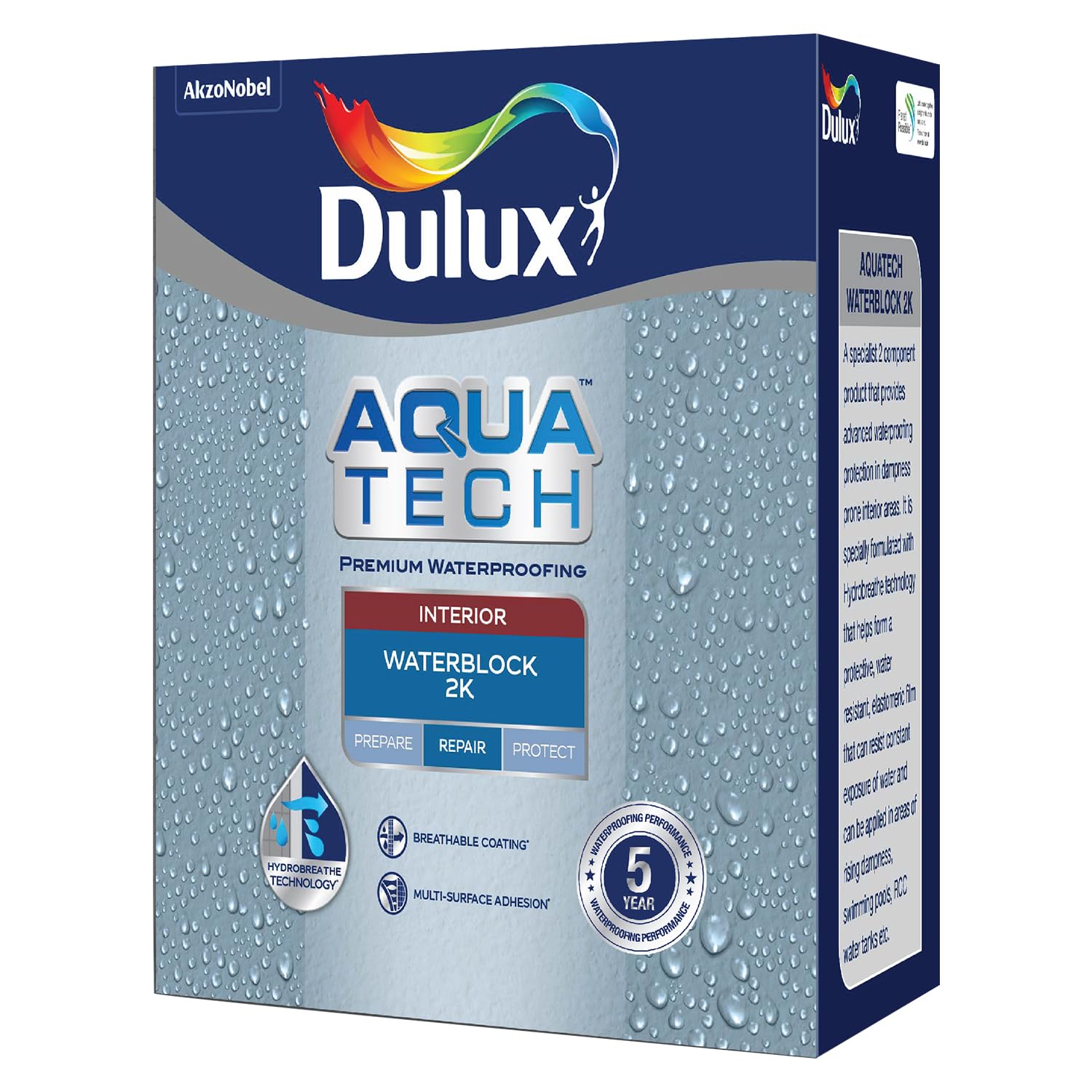 | Dulux Paint Aquatech Waterblock 2k is a specialist 2 component product that provides protection against water penetration for interior walls, bathrooms and... View product → |